Hiển thị các bài đăng có nhãn 2007. Hiển thị tất cả bài đăng

Thứ Năm, 19 tháng 7, 2012

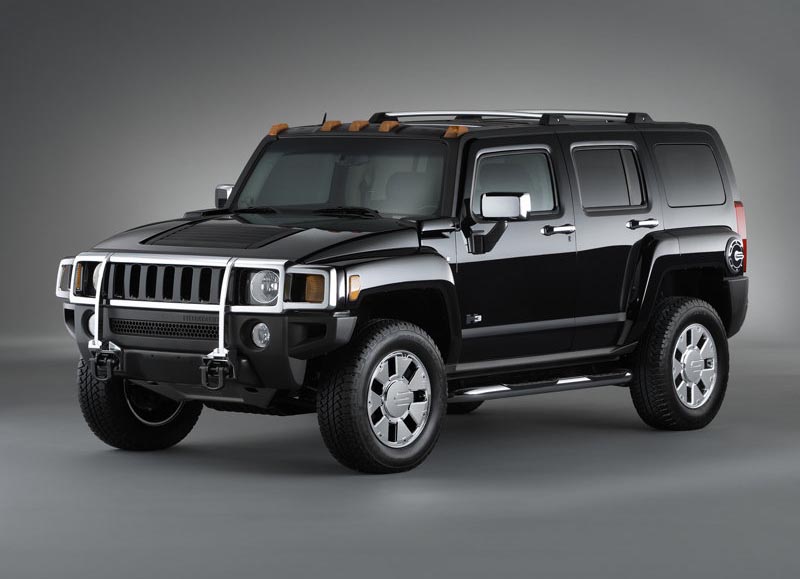
Hummer H3 Open Top, 2007


  • Hummer H3 Open Top, 2007

The 2007 HUMMER H3 has an available oversized power sunroof for an open-air feel, but the H3 Open Top concept goes a step further with ASC's unique sliding fabric "Infinivu" roof system. The expanded opening provides a nostalgic, safari-style experience in a thoroughly modern midsize SUV. The look and fun factor are classic, but the ease of operation, durability and weather resistance are strictly contemporary. Black chrome finish on the numerous H3 Chrome Appearance Package items available from HUMMER Accessories offsets the sparkling silver paint. Inside, the primary upholstery material is Townsend lambskin leather with Gatsby Green accent stitching.

Vehicle highlights
  • Unique, uni-directional sliding fabric "Infinivu" roof system from ASC
  • Fixed header, back glass and door
  • 20 x 9-inch Rozzi EGO chrome wheels
  • Mickey Thompson Baja Claw 325/50R20 tires
  • Custom Townsend lambskin leather upholstery with Gatsby Green accent stitching, Opal Gray trim and Ebony carpet
  • Black chrome door panel trim
  • OnStar Turn-by-Turn Navigation system

Thứ Bảy, 7 tháng 7, 2012

Daihatsu Terios, 2007

 
  •  Daihatsu Terios, 2007

Arguably the most stylish small 4x4 on the market, the totally new Daihatsu Terios has a dynamic, fun-to-drive appearance with strong off-road styling cues yet short front and rear overhangs, a long wheelbase and especially wide tracks and body width.
Its roomy, four-door, five-seat body succeeds in being compact yet practical, avoiding the bulk, high fuel consumption and negative image of some 4x4s.

Designed to appeal to young families and older people seeking the traditional 4x4 qualities of visibility, bad-weather traction and versatility, the Daihatsu Terios also offers small car running costs and manoeuvrability.

Its turning circle is a tight 9.8 metres (kerb-to-kerb) for the S and SE and a still hatchback-like 10 metres for the bigger-tyred SX, while the SX body length is between that of the new Renault Clio and larger Megane.
Compared to the previous model, the Daihatsu Terios 1.5 SX is 230 mm longer at 4,075 mm and a significant 190 mm wider at 1,745 mm. It is 45 mm higher but purely because of its standard roof rails. The entry-level 'S' model - which lacks roof rails - is actually 5 mm lower than before.

Greatly boosting the new Terios's tough, stable stance are front and rear tracks measuring 1,450 and 1,480 mm respectively - a massive 145 and 170 mm greater than before. Meanwhile, the wheelbase - at 2,580 mm - grows by 180 mm.
Complementing this are especially large 16 ins wheels for all models with either 215/65R tyres for the entry-level Terios 1.5 S manual and higher-spec SE automatic or beefy 235/60R tyres for the manual SX.

Versatile Interior
The versatile interior offers mid-sized hatchback passenger space with a clever split fold-and-tumble rear seat which liberates a 1,290 mm maximum floor length - long enough to take a mountain bike.
Even with the rear seat in use the 380 litre capacity boot is capable of taking four 45" golf bags, four vertically-stacked mid-sized suitcases or a typical baby buggy. Most models also have load-floor securing hooks.

Sprightly, Efficient Powertrain
Based on the Sirion's 1.3 litre DOHC 16-valve petrol engine, the Daihatsu Terios has a larger 1.5 litre capacity, producing 105 PS at 6,000 rpm and a flexible 103 lb. ft of torque at 4,400 rpm.
Its standard Dynamic Variable Valve Timing (DVVT) enhances low-speed pulling power and high rev throttle response by maximising combustion efficiency. It also boosts fuel economy and lowers exhaust emissions.

The new Terios's engine - with the same 72 mm bore as the 1.3 litre but a longer 91.8 mm stroke - is both lively and flexible, requiring fewer gear-changes to make sprightly progress.
For example, its torque curve is virtually flat between 3,200 and 4,000 rpm - the most frequently used rev-range in normal driving.
Top speed for manual models is almost 100 mph and over 93 mph for the automatic, while the Daihatsu Terios 1.5 S manual records 40.4 mpg on the Extra Urban Cycle and the Terios 1.5 SE automatic not far behind at 39.8 mpg.

The new Terios 1.5 S manual has a low CO2 reading of 186 g/km with the Terios 1.5 SE automatic recording 196 g/km.
In fact, the Daihatsu Terios 1.5 S has the best CO2 reading of any four-door 4x4 - diesel included - and comfortably beats rivals such as the Suzuki Grand Vitara, Mitsubishi Shogun Pinin and Honda HR-V.

The short-throw five-speed manual gearchange is light and slick, while the four-speed automatic is both quick-reacting yet capable of selecting a higher gear during more gentle driving, aiding fuel economy and refinement.
Meanwhile, all new Terios models have a full-time 4WD system with a fixed 50/50 front to rear torque-split and centre differential which eliminates axle wind-up - the phenomenon of the steering becoming increasingly heavy on full-lock.

Because of this 50/50 torque split, high-speed stability and slippery surface traction is greatly enhanced compared to most rivals. These models are usually rear-wheel drive with selectable 4WD or effectively front wheel-drive, only calling on 4WD when sensors detect wheelspin.

A fascia-mounted switch activates the electronically-controlled differential-lock. This further aids traction in mud or deep snow, while short front and rear overhangs and a 190 mm ground clearance also signal serious off-road ability. The new Daihatsu Terios has a front approach angle of 38 degrees with a rear of 37 degrees.

The compact engine is mounted in-line, followed by the gearbox. A centre differential transfers torque to both the front and rear axles via two separate propeller shafts.

Sporty Handling From New Chassis
The new Daihatsu Terios benefits from a totally new monocoque platform with a revised chassis tuned for car-like, confidence-inspiring handling with vastly improved ride and stability compared to the previous model.
Aided by its considerably wider front and rear tracks, the new Terios features front MacPherson struts, lower wishbones and an anti-roll bar.

The five-link rear suspension has variable-rate coil springs and near vertical rear shock-absorbers which improve damping and therefore comfort, pitch and roll.

In addition, an increased shock-absorber rebound stroke improves rough terrain driveability.
At the rear, a new lateral rod reduces axle squirm and benefits refinement, a newly-designed upper control arm enhances stability, a new shock-absorber reduces brake judder and a longer suspension stroke improves ride comfort.

Other rear suspension improvements include a more compact design resulting in a lower boot floor and a new design of spring and lower control arm which reduce rear differential noise.

Outstanding Safety Measures
The Daihatsu Terios has outstanding safety measures with in-house tests giving results equal to a Euro NCAP 4-Star occupant protection and 3-Star pedestrian protection.

Crushable structures are used at the front and rear of the body with the cabin itself made stronger to minimise occupant injury. To protect from side-impacts, the front floor cross-member, tunnel, sills, B-posts and roof-side rails are all strengthened to secure occupant survival space.
As for pedestrians, the front bumper and bonnet are designed to minimise injury to the head and thigh with a shock-absorbing structure built into the bonnet.

High-power seatbelt pretensioners are standard while special pads are installed to reduce injury to occupant knees, torso and lower legs. The pedals are also designed not to intrude during an impact.
Both driver, passenger and side airbags are fitted and the standard four-channel anti-lock brakes (ABS) also feature electronic brakeforce distribution (EBD) which maximises stopping power and minimises skidding.

Outstanding Equipment
Every new Terios model has an outstanding equipment tally with the entry-level Terios 1.5 S featuring air-conditioning, power-steering, ABS with EBD, full-time four-wheel drive with centre diff-lock, driver, passenger and side airbags, three rear-seat three-point seatbelts, radio/CD player, four electric windows and reverse parking sensors.

Expected to be the best-seller, the Daihatsu Terios 1.5 SX adds, for example, alloy wheels with 235/60R tyres, two-tone wheelarch extensions and side-skirts, roof rails, multi-information display, front fog-lamps, smoked 'privacy glass' for the rear side doors and rear window, leather steering wheel, electric windscreen de-icer and door mirrors and various AC sockets and load-restraint ties.

The automatic transmission-only Terios 1.5 SE has a similar equipment level to the SX but features a different design of alloy wheel with 215/65 tyres and has colour-keyed side skirts.

Like all Daihatsus, the new Terios will enjoy the protection of a three-year unlimited mileage warranty with roadside assistance plus an eight-year anti-perforation warranty.

Thứ Sáu, 13 tháng 4, 2012

Maybach 62 S, 2007

 
 Maybach 62 S, 2007

Maybach, the luxury brand with an illustrious past, re-established just four years ago, is adding a fourth variant to its line-up in the shape of the newly developed 62 S model. The "S" stands for "Special" and draws attention to the fact that the Maybach engineers at the Sindelfingen-based Manufaktur workshops have incorporated a wealth of meticulously developed, special features specified by their highly discerning customers into the new 62 S model. The result is a new dimension in travelling comfort, especially for the passengers in the generously proportioned rear compartment of the new high-end luxury saloon. Not to mention a prodigious power output thanks to the enhanced potency of the twelve-cylinder engine developing 450 kW/612 hp, making the new 62 S model the world's most powerful chauffeur-driven saloon in series production.

The new flagship model in the Maybach range is celebrating its world premiere at the "Auto China 2006" international motor show in Beijing in November - a move which expends its range of high-end luxury saloons. The Maybach 62 S is primarily designed to be chauffeur-driven and meets the very highest of standards in terms of spaciousness, smoothness and comfort - for a truly relaxing ride - and dynamism for saving that most precious of commodities: time. Precisely what is needed in these increasingly frenetic times.

The exterior boasting a dynamically elegant appearance
Prominent exterior features accentuate the dynamic presence of the new Maybach 62 S and clearly distinguish it from the 62 model. These include a modified front end with a strikingly redesigned radiator grille as well as new, distinctive 20-inch spoked wheels and a modified light-cluster design. Like the 57 S model, the new Maybach 62 S boasts lavish single-tone paintwork in black or silver, both of which are available exclusively for the "S" models. Alternatively, customers can now specify a special paint finish in shimmering white. Discreet "62 S" lettering adorns the front wings beneath the A pillars and the boot lid, while a modified rear apron with two integral, trapezoidal exhaust tailpipes hints strongly at the immense performance potential of the 62 S. This dynamic and elegant appearance puts the Maybach 62 S in a league of its own when it comes to luxurious chauffeur-driven cars.

The interior
The contemporary Maybach interpretation of lavish luxury, consummate comfort and superlative dynamism is also reflected in the interior of the 62 S. Here high-grade materials are hand-finished to perfection for a distinctive and particularly exclusive look, all in inimitable Maybach style. Carefully coordinated applications of exquisite piano lacquer and sporty carbon or anthracite poplar create an atmosphere of dynamic elegance both in the rear compartment and in the driver's direct field of vision and activity. Newly designed, high-grade leather upholstery tastefully accentuates this overall impression.

12-cylinder powerplant and comfort-tuned chassis
Effortlessly superior performance in any situation comes courtesy of a Mercedes-AMG-enhanced V12 powerplant developing 45 kW/62 hp more than the engine specified for the Maybach 62. The twelve-cylinder engine in the Maybach 62 S has a displacement of six litres and an output of 450 kW/612 hp by virtue of a twin turbocharger and a water-type intercooler. The impressive maximum torque of 1000 Nm (electronically limited) is available over a wide engine speed range between 2000 and 4000 rpm. This provides even the most sportily inclined of Maybach drivers with effortless power reserves at all times. With acceleration from zero to 100 km/h in only 5.2 seconds, the new Maybach 62 S impressively demonstrates its outstanding performance potential. The top speed is electronically limited to 250 km/h in chauffeur-driven vehicles.

The exclusivity of the twelve-cylinder powerplant is underlined by a model plate on the cover bearing the signature of the Mercedes-AMG technician who assembled it by hand based on the now familiar "one man, one engine" principle.

In contrast to the sportier configuration of the 57 S model for owner-drivers, which features a stiffer and lower chassis, the Maybach engineers decided to retain the full spring travel for the 62 S in order to achieve an outstanding, practically unsurpassed level of ride comfort. In terms of comfort, the chassis marks the absolute pinnacle of automotive engineering. Yet it also offers a high degree of dynamic potential for reliably transferring the power to the road whatever the scenario. Hence the Maybach developers have succeeded in reconciling, to a near perfect degree, two very different requirements.

Maybach continues its rich tradition
The outstanding attributes of the Maybach 62 S set new standards at the high end of the passenger car industry and also continue the tradition of the legendary Maybach saloons which represented the elite in German and international carmaking circles back in the 1920s and 1930s. Even then, many Maybach cars were built and equipped to be chauffeur-driven - a tradition which the 62 S model is proud to honour.


Thứ Năm, 12 tháng 4, 2012

Daihatsu Copen, 2007


 Daihatsu Copen, 2007

The Copen's appeal has been drastically widened thanks to the fitment of the same 87 PS engine as the Sirion supermini which not only boosts performance and economy but allows higher gearing for more relaxed cruising. The only difference to the pure uncluttered shape of the previous Daihatsu Copen is a small rear boot spoiler and a range of new colours.
Cute and timeless Daihatsu Copen sports car has become considerably more desirable with a punchy yet more frugal new 1.3 litre engine, higher gearing to enhance refinement.

New Engine Transforms Appeal
The Copen's new 1.3 litre petrol engine totally transforms the small car's appeal while providing even better fuel economy and lower exhaust emissions - a Daihatsu speciality.
The engine itself is highly-advanced and is essentially the same unit fitted to the Daihatsu Sirion supermini.
Featuring Dynamic Variable Valve Timing (DVVT) which enhances low-speed pulling power and high-rev response, the twin overhead camshaft unit is compact and light, with an alloy head and block.
The new Daihatsu Copen is only 27 kg heavier than the previous 660 cc model and now weighs a nimble 850 kg.
Power is 87 PS at 6,000 rpm with torque of 88.5 lb ft at 4,400 rpm. The engine has a 10.3:1 compression ratio and features a bore and stroke of 72 x 79.7 mm.
It also features durable chains for its camshaft drive which require no maintenance and cannot snap like belt systems. Oil change intervals are now 9,000 miles instead of the previous 660 cc model's 3,000 miles.

World's First Self-Regenerating Catalyst
The new Sirion 1.3 litre launched in 2005 featured the world's first self-regenerating catalyst. This innovation is also shared by the new Copen.
It effectively extends the life of the catalytic converter, reducing maintenance costs and is kinder to the environment as it keeps the catalyst 'healthier' over a higher mileage meaning the already low 140 g/km does not increase as the engine becomes older.
This revolutionary technology works by providing a self-regenerating capability in the particles of the precious metal which normally degrades.
Using nanotechnology, the intelligent catalyst incorporates metallic ions of palladium, the most heat-sensitive of the metals used in a catalytic converter.
According to temperature and available oxygen, the particles turn in and out of a crystalline state therefore regenerating and prolonging the cat's ability to clean exhaust gasses.

The luggage capacity with the roof up is sufficient for a weekend away. With the roof down, there is space for a soft sports bag.
The front-wheel drive Daihatsu Copen measures 3,440 mm long, has a 1,475 mm width excluding mirrors and is 1,245 mm high. Its wheelbase is 2,225 mm, overhangs are tiny and the driver sits perfectly between front and rear wheels for extra handling intimacy. The engine is transversely-mounted in the front.

Agile Chassis - Conceived As A Sports Car
Anyone expecting the Daihatsu Copen to be a shallow style-statement will be in for a surprise. The power-steering is especially direct and informative and the handling taut and agile.

High Safety Levels
Safety is given high priority in the Daihatsu Copen which - despite its small size - has all the latest life-saving and injury-reducing initiatives.
The braking system features servo-assisted front ventilated disc brakes measuring a generous 246 mm with 180 mm rear drums.
Anti-lock is also standard as is Electronic Brakeforce Distribution (EBD) which further avoids the locking-up of individual wheels during severe braking.
Daihatsu's much-admired impact-sensing system acts as an emergency-alert device by automatically unlocking the doors following an accident, activating the hazard flashers and cutting off the fuel supply.

Thứ Ba, 17 tháng 5, 2011

Acura TSX, 2007

Acura TSX, 2007


The Acura TSX is one of the hottest luxury sedans on the road today, setting sales records month after month since its introduction and winning over enthusiasts customers and automotive press with its blend of outstanding performance, nimble handling and sporty styling. The TSX continues to distance itself from the competition by offering class-leading technology and the latest standard safety features, including a Tire Pressure Monitoring System (TPMS) new for 2007 model year.

The 2007 TSX is equipped with a 2.4 liter DOHC i-VTEC(TM) 4-cylinder engine, generating 205 horsepower and 164 lb-ft of torque*, giving the TSX engine overall performance comparable to many 6-cylinder powerplants. The i-VTEC "intelligent" valve-control system delivers enhanced performance across a broad power band, superior fuel economy and reduced exhaust emissions. A direct ignition system with knock control helps optimize power and fuel efficiency by ensuring a properly timed spark at all engine speeds.

The TSX engine is equipped with a drive-by-wire throttle control system that eliminates the need for a mechanical connection between the accelerator pedal and the engine, which continuously adjusts the sensitivity of the accelerator pedal to match current driving conditions. It also incorporates throttle control into the car's Vehicle Stability Assist(R) (VSA(R)) system, the vehicle's cruise control function and modulates the throttle to help make automatic transmission shifts even smoother.

Platinum-tipped spark plugs and a self-adjusting cam chain help the TSX run for 100,000 miles or more before requiring a major scheduled tune-up.

Since many performance enthusiasts prefer shifting gears, the TSX comes with either a close-ratio 6-speed manual transmission or a compact 5-speed Sequential SportShift automatic transmission as standard equipment. The lightweight 6-speed gearbox features short shift throws and multi-cone synchronizers on all gears for quick, light shifting action. The transmission case is made from magnesium alloy, a material typically reserved for racing applications. This case weighs 6.6 pounds less than a comparable aluminum unit and is extremely rigid to damp out noise and vibration.

Along with its impressive 205 horsepower output, the TSX with manual transmission delivers 22 mpg city/30mpg highway, while the TSX with automatic transmission delivers 22 mpg city/31 mpg highway. Air-assisted fuel injectors, an underfloor catalyzer and a high-flow, low-heat mass exhaust manifold help the TSX achieve EPA Tier 2-Bin 5,Carb Low Emission Vehicle-2 (LEV-2) emissions status.

To complement its high-adrenaline powertrain with sports car-like handling, the TSX features an extremely rigid unit body structure and a race-bred, 4-wheel-independent double-wishbone front and multi-link rear suspension. The suspension is track-tuned to reduce lift, dive and body roll and boasts gas-pressurized shock absorbers and large front and rear stabilizer bars. A quick-ratio, variable power assist rack-and-pinion steering system provides outstanding feel and responsiveness and features an anti-kickback valve for reduced kickback on rough roads.

Handling is further enhanced by a Vehicle Stability Assist(R) (VSA(R)) that works in concert with the braking and drive-by-wire throttle systems to provide enhanced control during acceleration, braking and cornering. This 4-channel system also orchestrates the throttle and each of the vehicle's four disc brakes to seamlessly integrate traction control, anti-lock braking and stability enhancement for increased driver control. The electronically controlled Brake Assist feature helps the driver apply full brake pressure during accident avoidance situations.

To provide stability and offer superb stopping power, the TSX is equipped with 4-wheel disc brakes with 4-channel ABS, 17-inch alloy wheels and P215/50R17 Michelin all-season high-performance tires.

The body of the TSX offers crisp lines and dynamic curves. In front, styling cues include a signature 5-sided Acura grille, angular side markers and bumper-integrated fog lamps. In the rear, the taillights slope to meet a short, high trunk lid, which terminates sharply to help air separate cleanly off the back of the car at top speeds. Stylish nine-spoke alloy wheels finish the TSX's sporty appearance.

The TSX is available in nine exterior colors: Premium White Pearl, Alabaster Silver Metallic, Carbon Gray Pearl, Nighthawk Black Pearl, Artic Blue Pearl, Royal Blue Pearl, Glacier Blue Metallic, Deep Green Pearl, and Milano Red.

The five-passenger interior of the TSX is sporty yet refined with modern LED- illuminated instrumentation and intuitive controls. Like the RL and TL sedans, the TSX comes equipped with standard Bluetooth(R) enabled hands-free phone system. The system, called HandsFreeLink(TM), enables a Bluetooth(R) wireless interface with mobile phones allowing calls to be made and received using the TSX's voice recognition and audio interfaces. To make a call, drivers push the steering wheel-mounted HandsFreeLink(TM) button, which connects their phone to the system. The HandsFreeLink(TM) system can be programmed to accept up to six different phones and up to 50 numbers may be stored in the system's phone book.

The comprehensively equipped TSX features deeply bolstered, perforated leather seating surfaces, dual-zone automatic climate control, a power moonroof, power windows and door locks and keyless entry. The leather-wrapped three-spoke sport steering wheel provides a sporty feel, features wheel-mounted audio and cruise control as well as voice recognition and HandFreeLink switches.

The TSX comes equipped with a 360-watt Acura Premium Sound System with standard XM(R) Satellite Radio and an auxiliary jack located in the center console for playing MP3 and other digital music devices. The standard 8-way power adjustable driver's seat features two-position memory, so when the driver enters the car with the key fob, the TSX automatically adjusts the driver's seat to their preferred position. In addition, tilt and telescopic steering wheel allows the TSX to accommodate a wide range of drivers. A 4-way adjustable power passenger seat increases passenger comfort and convenience.

The only factory option (other than transmission choice) on the TSX is the Acura Navigation System with Voice Recognition (TM). This easy to use navigation system features a menu of 560 voice commands, an 8-inch display, and a comprehensive destination guide with over 7 million points of interest including the Zagat Survey(TM) Restaurant Guide, 3-D graphics for freeway interchanges including on and off-ramps and turn-by-turn voice guidance. In addition, 1.7 million U.S. cities and street names can be accessed through the voice recognition system. The navigation system can be controlled through the steering wheel-mounted voice recognition button or by using the menu on the touch screen.

To ensure proper maintenance intervals and reduce the number of service visits, the TSX features a Maintenance Minder system that automatically monitors the vehicle's unique operating profile and alerts the driver via the Multi-Information Display when certain types of routine service, including oil and filter replacement and tire rotation, are needed.

The TSX is also equipped with standard dual-stage, dual-threshold driver's and front passenger's airbags, and side airbags for the driver and front passenger. The passenger's side airbag uses seven sensors in the seatback and side bolster to determine the height and position of the occupant. If the sensors detect that a child or small-stature adult is leaning into the deployment path of the side airbag, the bag will not deploy.

To further enhance safety, side curtain airbags help protect vehicle occupants from head and neck injuries in the event of a significant side impact. Additionally, the 2007 TSX is now equipped with a Tire Pressure Monitoring System (TPMS).

Like all Acura models, the TSX is covered by a comprehensive 4-year/50,000 mile bumper-to-bumper limited warranty, and a 6-year / 70,000 mile powertrain limited warranty. Additional ownership benefits include Acura Total Luxury Care (TLC), which provides free 24-hour roadside assistance, concierge service, and trip routing.

Thứ Hai, 25 tháng 4, 2011

Hummer H3R Off Road Concept, 2007

Hummer H3R Off Road Concept, 2007

 
Primarily to the efforts of the Team HUMMER racing team, led by Rod Hall, the HUMMER H3 has quickly proved to be a formidable off-road competitor. It runs - and wins - in stock-class off-road races, where racers must rely on production chassis and powertrains. The H3R pays homage to the racing SUV while pushing the envelope on what could be considered "stock" - supposing the factory decided to drop in the 505-horsepower, 7.0L V-8 from the Corvette Z06. In addition to the high-powered engine, the H3R also sports a number of racing-inspired exterior modifications and an interior that blends racing functionality with boulevard comfort and convenience. No, a production H3 equipped with an LS7 engine isn't in the cards, but for 2008, HUMMER offers the H3 Alpha, which is powered by a new, 300-hp 5.3L all-aluminum V-8.

Vehicle highlights
    * H3R concept
    * LS7 7.0L V-8 with 505 horsepower and Hydra-Matic 4L60 electronically controlled four-speed transmission
    * Custom valve covers and ignition coil covers
    * New, forward-tilting hood with Lexan see-through insert
    * Power-operated hood hinges
    * Custom air induction system with dual air boxes
    * Racing-inspired paint scheme with custom badging
    * Off-road lighting package with unique light bar
    * Custom rear dual exhaust system with four outlets
    * Wheel flares with quick-remove fasteners
    * HID headlamps from Starr Lighting
    * Clear front corner lamp lenses
    * Front bull bar
    * Body-color "Jerry" can mounted on the spare tire carrier
    * Twenty-inch wheels
    * Mickey Thompson Bear Claw 35-inch off-road tires
    * Rotora high-performance brake package
    * Fixed quarter window inserts
    * Eaton front locking differential
    * Enhanced cooling system with larger radiator
    * Modified suspension with Tenneco/Rancho four-inch lift package and Rancho reservoir shocks
    * Re-trimmed interior with brushed metal accents and trim
    * Front racing seats with five-point safety harnesses and weather-resistant seat material
    * Simpson window safety net
    * Washable rubber floor covering replaces carpeting
    * Navigation radio system
    * Off-road integrated display gauge package with compass, inclinometer, altimeter and timer
    * Auxiliary performance gauges
    * Auxiliary 20-gallon fuel tank
    * Second-row seats deleted
    * Cargo-area spare tire mount

GM Accessories (production and concept)
    * Rocker protectors
    * Underbody shield
    * Side-window weather deflector
    * Roadside assistance package
    * First-aid kit
    * Hitch receiver cover
    * Body-color grille

Hummer H3X, 2007

Hummer H3X, 2007

 
DETROIT - Less than a year after the H3 went on sale, HUMMER is unveiling a new model called the H3x. It is based on the H3 Street concept shown at the automotive industry's annual Specialty Equipment Market Association (SEMA) show in November.

The 2007 H3x, designed to appeal to buyers with an interest in a customized appearance, injects new energy into the HUMMER lineup, while delivering the brand's trademark iconic bold design and unmatched off-road prowess.

The H3x begins with an H3 equipped with the Luxury package, chrome tube steps, chrome appearance package and chrome fuel door. The package also includes a body-color grille and spare tire cover, unique tires, wheels and center cap, and a brush guard. The interior features embroidered headrests.

Consumers can further personalize their H3x with any of the H3's eight exterior colors and three leather interiors. The model is scheduled to arrive in dealerships in late summer of 2006. It will be available only in the United States and Canada.
* H3X was initially called the H3 Street.

Thứ Sáu, 22 tháng 4, 2011

Volvo Caresto V8 Speedster Concept, 2007

Volvo Caresto V8 Speedster Concept, 2007


First shown at last year's SEMA show, the Caresto Hot Rod was so well received Volvo Cars brought it back for the 2007 show as a compliment to the Caresto C70 Convertible. Completely hand assembled from aluminum and carbon fiber, the Caresto Hot Rod features many Volvo parts, including the mid-engine 311-horsepower V8 engine. Craftsmanship is what sets the Caresto Hot Rod apart from many other custom cars. Precision fit and finish is evidenced on every body panel and stitch of premium leather.

Volvo Heico C30 SEMA Concept, 2007

Volvo Heico C30 SEMA Concept, 2007

 
 Windswept beaches, twisty island roads and outrageous North Shore waves have just landed in the middle of the Nevada desert. Yet this is not a mirage. It's the groundswell of excitement generated by the debut of the breathtaking Volvo C30 by Heico Sportiv. One look at this modified special-version C30 is enough to spark island fever among those longing to leave civilization behind and embrace the Aloha spirit of adventure.

The beauty of Volvo's new C30 is that it begs to be customized. Like a blank canvas or a pristine white sand beach, Heico's designers dressed the solid white flanks of the C30's exterior with a radiant, splashy orange surf-pattern kit. The bright orange wave originates at the lower front fenders, artfully climbs up the doors, crests the edges of the tailgate and wraps neatly around the rear fascia.

Inspired by the well-toned surfers who spend countless hours battling the waves, the Heico C30's refined bodywork is rippling with its own athletic, muscular appearance. Widened fender flares and lower side skirts are painted to match the body for a seamless appearance. The front features integrated spoiler flaps, three larger air ducts, combined fog and cornering lights and a sport grille emblazoned with Volvo's iron mark. A deeper and wider rear skirt frames quad stainless-steel exhaust pipes.

The hunkered-down look is further accentuated by a modified sport suspension with performance shocks and springs that lower the vehicle by 40 mm. An awesome set of 19-inch five-spoke light alloy VOLUTION® V TITAN wheels is wrapped with low-profile 235/35R19 Continental Sport Contact III tires. Bringing the action to a stop is the job of the enhanced four-piston brake system. Ocean-blue painted calipers displaying the Heico Sportiv logo grab onto 326 x 30 mm discs via sport brake pads.

Surfing is a highly addictive sport that's guaranteed to generate an adrenaline rush for the experienced and novice alike. The same can be said about the enhanced capabilities of the Heico C30's modified powerplant. The stock 2.5-liter 5-cylinder turbocharged engine has been massaged to deliver a robust 300 horsepower at 5500 rpm and a stout 309 lb.-ft. of torque at 3500 rpm. So equipped, Heico says this C30 can sprint from 0 to 100 km/h (62 mph) in just 5.4 seconds.

The turbocharger and intercooler have been modified for enhanced performance while breathing is improved via a Heico sport air filter. To ensure that the engine delivers the goods, Heico has fitted an enhanced ECU power upgrade to the show car. Since enthusiasts like to take matters into their own hands, the C30 is equipped with Volvo's slick-shifting six-speed manual gearbox that transmits power to the front wheels. All of the safety features found on the production C30, including Dynamic Stability and Traction Control (DSTC) remain operative on this totally radical ride.

Vibrant sights and sounds of the islands have been lavishly interpreted and applied to the Heico C30's cabin. Open the door and even the most jaded dude or dudette is apt to exclaim "Cowabunga!" The interior takes the orange theme to the next level. Like a spectacular ocean sunset, tropical flowers or custom surfboard, the depth and richness of the hue is sure to cause double and triple takes.

The bespoke high-quality sport bucket seats emblazoned with the Heico Sportiv logos are swathed in rich orange leather with matching orange stitching. But the Heico team didn't stop there. The material also covers the split-folding rear seats, door panels, steering wheel, floor console armrest, shift knob and parking brake handle. Meanwhile, the matching shade of orange has been skillfully applied to the dashboard, floor mats and even the seatbelts.

Building upon the C30's high tech ambience, stainless steel doorsills with the Heico Sportiv logo add to the look of luxury. The C30's signature super-slim center console is covered with brushed aluminum like the production car. The alloy theme continues with Heico's aluminum pedal set, driver's footrest and aluminum door pins.

Thứ Hai, 4 tháng 4, 2011

Isuzu Ascender, 2007

Isuzu Ascender, 2007


IntelliChoice named the 2006 Ascender 5-Passenger a "Top Winner" in its class for both lowest fuel cost and lowest operating cost, and a "Smart Choice" in eight other categories. Isuzu's flagship SUV returns for 2007, sized "just right" to offer plenty of room for five passengers, and with the multiple award-winning 4.2-liter inline six- cylinder engine under its hood. Changes include the following:

    * Tire Pressure Monitoring System added as standard equipment on all models
    * Bering Blue Metallic replaces Adriatic Blue Metallic
    * Storm Gray Metallic replaces Graphite Gray Metallic
    * Six-spoke machined-finish alloy wheels replace painted wheels as standard equipment
    * OnStar communication system discontinued as an available option
    * 7-Passenger model discontinued
    * Trim levels are unchanged. Both 2WD and 4WD models are available in base S trim and offer optional Preferred Equipment, LS, Leather and Luxury packages.

Thứ Hai, 21 tháng 3, 2011

Volkswagen Up Concept, 2007

Volkswagen Up Concept, 2007


There are cars that endure for all times. They are icons of their type, masterpieces of craftsmanship and technology; they put ideas into motion, make progress tangible and sometimes quite simply make everyday life better, more practical and enjoyable. Many of these cars carry the VW logo. "Bug, Beetle, New Beetle", "T1, Bulli, Samba bus, California", "Golf, GTI". Now Volkswagen is presenting - as a world premiere at the International Motor Show (IAA) in Frankfurt - a concept car that once again has the right stuff needed to move more than just one generation. It is a small, pure and high-spirited Volkswagen that pays tribute to its environment. The overall concept is marked by an innovative, clear, intuitive functionality. The name of the concept car: up! - a positive name that is a synonym for departure, activity, dynamics and the future. "For Volkswagen", says Dr. Ulrich Hackenberg, Board Member with Responsibility for Technical Development, "the response of IAA visitors will be a decisive test to determine whether the concept has the same kind of potential possessed by the Beetle at one time or by the Golf today."

Concept
The up! is a city specialist, a car for four persons and all languages, for the job, the university, the drive to the beach and the excursion outside the city gates. A small car that shows a lot of size, because it offers more space than any other car of similar length (3.45 meters) and width (1.63 meters). Its engine - conceivable here are all facets of technology that can be sensibly applied - will run in the rear. And that changes everything: Space, mood and design.Walter de Silva, Chief Designer of the Volkswagen group, sums it up like this: "The up! is not a car whose form will become obsolete within a very brief period of time. It shines in its cleverness and yet is made with loving care. And so the up! is a clear and strong statement for future Volkswagen design." Furthermore, the team of designers and engineers has envisioned the up! concept car as the first member of an entire model line; other facets are entirely conceivable.

Exterior design
The fact that the engine of the up! runs in the rear has a decisive inf luence on its exterior design. That is because the up! has no classic radiator grille. It forges links to the Beetle. This fact alone gives it a great deal of independence. Dominant design characteristics are the headlamps that take an inward and diagonal line, between them the horizontally arranged air vents, the VW logo (as one of the few details kept in chrome), the tailgate that extends far forward and the smooth bumper with a circumferential black stripe as a detail of the "happy face" that is typical of Volkswagen.

The powerful appearance of the up!, despite all of its compactness, is emphasized by a very wide track width (1.42 meters) relative to vehicle width. The wheels are flush with the sporty outboard wheel arches and side skirts. The radial design of the wheels and surfaces extending right up to the edge of the rim make the 18-inch wheels appear significantly larger than they actually are.

The wheels that are arranged far outboard in the bumper areas reduce body overhangs to a minimum. All of these features are part of an unmistakable side profile with a very long roof arch as well as clear and large surfaces. Giving shape to its style here are the large doors and the lateral window surfaces, which incline sharply upward at the height of the rear wheel arch and thereby help to form the very independent C-pillar design.

Interior design
Mounting the engine in the rear opened up entirely new interior concepts. Relative to its exterior size, the space offering is exceptionally forward-thinking. The same is true of its variability: Except for the driver's seat, all other seats can be folded and removed. Since they are designed as light shells, they can be quickly stowed in one of the cargo areas - besides the front trunk there is also one in the rear - to free up space. Afterwards, the entire passenger compartment length can be utilized as a storage area for especially bulky objects.

To achieve the high level of seating comfort that is usual at Volkswagen, besides their ergonomic design, in the case of the up! this level of comfort is also attained by a simple yet very effective trick: Similar to a self-inf lating air mattress, air can be sucked out of the seat surfaces via a valve. This means that the seats can be adjusted 1:1 to the body anatomies of the occupants who have just
taken a seat.

Intuitive controls
On its up! concept car, Volkswagen is presenting some completely new solutions when it comes to operator controls. Klaus Bischoff, Chief Designer for the Volkswagen Brand, comments on this: "Another reason the up! is so fascinating is because everything, every detail, was thought out anew. In the interior we have a touchscreen with new proximity sensor technology for controlling the navigation, radio, trip computer and climate control systems. It is operated absolutely intuitively. As a result, the most complicated functions can be controlled like child's play."

The up! has two central displays. In the cockpit, a 8-inch monitor shows the driver key information such as vehicle speed, fuel level and range, as well as momentary CO2 emissions.

Thứ Ba, 22 tháng 2, 2011

Peugeot Flux Concept, 2007

Peugeot Flux Concept, 2007


The concept car Flux, designed by Mihai Panaitescu, won the 4th Peugeot design competition. The car was designed to achieve universal pleasure by adapting different lifestyle situations. The theme of this fourth competition, summed up by acronym P.L.E.A.S.E. Innovate!, has inspired creativity of web based designers throughout world, resulting in more than 4,000 projects.

Complimenting present automotive aspirations, Flux has shown the theme’s most relevant illustrations, since its concept corresponds to a type of car that achieves utter driving Pleasure through its Light weight and Efficiency, while at the same time remaining Accessible through the Simplicity and Ecology of its design.

The Flux was chosen by a jury chaired by Frédéric Saint-Geours, General Manager of Automobiles Peugeot and made up of Peugeot representatives, its Style Centre, Xbox, but also of web based people who voted online.

Unveiled at this year’s Geneva show, and thanks to its sophisticated design, Flux will be making a second appearance at the Frankfurt Motor Show. Flux will appear ‘real’ in the form of a full-scale model presented at Peugeot’s exhibition space and ‘virtual’ in a new version of the PGR 4 game on Xbox 360. These two elements constitute the two most fantastic prizes of the 4th Peugeot design competition.

The 4th design competition attracted greater participation, with more than 200 additional projects compared with the 3rd competition (4,029 compared with 3,800), confirming its international appeal, with 113 countries represented as opposed to 107 in the last competition.